![AgeWise King County [logo]](https://www.agewisekingcounty.org/wp-content/themes/agewisekingcounty/images/logo.png)
Water, Water Everywhere, and Not a Drop to Drink
 I’ve been thinking about water a lot lately. We are getting ready for our yearly late summer kayak trip. This year we are going to the Broken Group Islands in Barkley Sound, on the west side of Vancouver Island. It’s a 10-day trip we have done twice before, and we know water is a problem.
The water problem? There is very little of it where we are going. Well, there is a lot of salt water, but water you can drink? Not so much. In fact, Parks Canada says to take all your water with you. So how much water do nine people need for drinking and cooking for eight days? That is the question. We have great water bladders that fit in the boats, but how much is enough? Too much water will be extra weight, making the kayaks unstable and leaving us less room for gear, too little will be a serious problem, not only for drinking, but for our meals as well since most require water to rehydrate.
The answer also comes back to one of my favorite topics, salt. How to find the balance between too much salt and not enough water? Salt complicates the answer to the question of how much water to take since dehydrated meals tend to be loaded with salt and salt makes you thirsty. The solution may actually be in trying to reduce the amount of salt in your food which will require less water to drink.
The recommend intake for sodium varies a bit, around the world, but somewhere between 1,500 and 2,300 mg per day is a global goal. Many Americans eat twice that. To help cut the salt, at home or when camping, try choosing foods that have about the same amount of sodium as calories. If your meal has about 500 calories, it should have about 500 mg of sodium, (a ratio of about 1 to 1).
A packet of freeze-dried biscuits and gravy at a local hiking store has about 1,700 mg of sodium in a 500-calorie serving. That’s three times the sodium to calorie ratio; almost a whole days’ worth of sodium in one meal but only a quarter of the calories you need in a day.
Is it possible to have biscuits and gravy without the salt? The simple answer, “yes,” but only if you make it yourself.
With a few tweaks, my homemade version of biscuits and gravy cut the sodium from a 1,700 mg packaged serving to under 600 mg. How? Substitute low sodium turkey sausage for pork sausage, leave the added salt out of the biscuits, and use powdered nonfat dry milk with a tablespoon of vinegar instead of salty buttermilk. To save even more sodium, I use low sodium baking powder, which you can find on-line or in some grocery stores.
Because we have no refrigeration, this is a meal we eat on our first or second day out. I make the biscuits at home ahead of time, and dry the cooked turkey sausage in my dehydrator mixed with a small amount of bread crumbs to help the meat rehydrate.
My homemade version cuts out over 1,100 mg of sodium per serving while offering nearly identical calories, higher protein, and much better flavor and texture. This recipe isn’t just for camping. Reducing your salt intake is always a good idea! Make it at home using fresh low sodium turkey sausage that you cook in a frypan, and milk from a carton, if you prefer.
Low-Sodium No-Salt Biscuits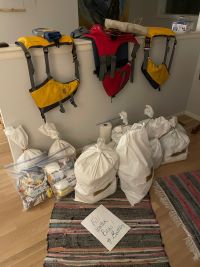
Bake these the day before you leave for your trip, serves four.
2 cups flour
1 tablespoon baking powder (or substitute low sodium baking powder)
¼ cup unsalted butter, (cubed)
¾ cup milk
1 tablespoon vinegar, (add to milk)
Preheat oven to 425 degrees. Cut the butter into the flour and baking powder. Stir in the milk and vinegar mixture until just combined. Roll, cut into 8 thick biscuits. Bake 12-15 minutes. Let them cool completely so they don’t sweat, before packing in a rigid container to protect them in your kayak or backpack.
Low Sodium Dry Gravy Pack
To make 2.5 cups of finished sausage gravy:
2 cups water
1 cup dehydrated turkey sausage and bread crumbs mixture (I use this recipe, https://www.thepurposefulpantry.com/dehydrate-ground-beef/)
2/3 cup instant dry milk powder
2 tablespoons of flour
1 teaspoon dried sage
1 teaspoon black pepper
½ teaspoon thyme.
At home, put all the dry ingredients except the sausage into a zip lock bag. Write a note that says “Mix with 2 cups water” and put it in the bag. Package the dried turkey sausage separately, keep it frozen till day of your trip.
In camp: Pour 2 cups of fresh water into pot. Add dried turkey and let sit 15 minutes. Over medium heat, whisk in dry ingredients. Bring to a boil while stirring, careful not to burn, then turn off the heat, cover and let sit for 10-12 minutes to reconstitute meat. Serve over biscuits.
Nutrition Info:
Low-Sodium Turkey Sausage Gravy (1/4 of recipe): Calories: 178, Protein: 18 g, Carbohydrates: 12 g, Fat, 7 g, Sodium 222 mg
No-Salt Biscuits (2 Biscuits): Calories: 356, Protein: 8 gm, Carbohydrates: 50 gm Sodium: 383 mg (with regular baking powder).
 Contributor Katy G. Wilkens recently retired as registered dietitian and department head at Northwest Kidney Centers. The National Kidney Foundation Council on Renal Nutrition has honored her with its highest awards for excellence in education and for significant contributions in renal nutrition. She has also been awarded the Medal of Excellence in kidney nutrition from the American Association of Kidney Patients.