![AgeWise King County [logo]](https://www.agewisekingcounty.org/wp-content/themes/agewisekingcounty/images/logo.png)
The Small Moments Matter: Practical Ways to Support a Loved One Living with Dementia at Home
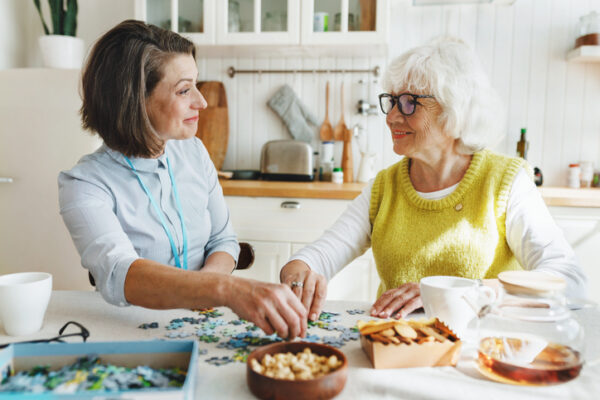
More than 110,000 people in Washington state are living with Alzheimer’s or another form of dementia, and that number climbs every year. Most families don’t encounter this reality in a doctor’s office. They encounter it in the kitchen, trying to figure out why Mom can’t find the coffee mugs she’s used for 40 years, or in the hallway, watching Dad hesitate outside a bathroom door he no longer recognizes.
A diagnosis explains what’s happening in the brain. It doesn’t tell you what to do on a Tuesday afternoon when your loved one is anxious, bored, or lost in their own home. That gap between the clinical and the everyday is where most caregivers spend the bulk of their time, often without much guidance.
Here’s what we’ve learned works, and what King County families don’t have to figure out alone.
Start with the environment, not the person
A lot of dementia-related frustration—for both the person and the caregiver—comes from an environment that no longer makes sense. Doors look alike. Drawers hide their contents. Routines that used to be automatic (get dressed, brush teeth, find the bathroom) suddenly require decisions the brain can’t reliably make anymore.
Simple visual supports can close a surprising amount of that gap:
- Labels with both words and images on drawers, cabinets, and doors reduce the guesswork that leads to wandering, agitation, or asking the same question repeatedly.
- Step-by-step visual sequences for routines (like a morning checklist with pictures) let someone complete a task independently instead of needing constant prompting.
- Clear sightlines and consistent cues, such as a labeled bathroom door, a visible clock, a calendar with today circled support orientation without anyone having to explain it over and over.
None of this requires a renovation. It’s mostly about removing ambiguity from spaces that used to be second nature.
Rethink what “engagement” means
Many families default to the TV because it’s easy, but passive screen time doesn’t offer the sense of purpose or accomplishment that people living with dementia still need and deserve. The research on this (and the Montessori-inspired dementia care approach many local providers now use) points to something simple: Adults want adult-appropriate activities that use their remaining strengths, not childish busywork.
That can look like sorting, matching, or puzzle-based activities designed for adult hands and adult dignity; hands-on tasks tied to a former hobby or job; or simply structured one-on-one time that doesn’t require verbal memory to enjoy. The goal isn’t to “fix” cognitive decline; it’s to create moments of focus, calm, and connection that both the person and their caregiver can look forward to.
You don’t have to build this alone
King County has an unusually strong network for this work. Here are programs that can help you support someone with dementia at home:
- Dementia Friends Washington and the UW Memory and Brain Wellness Center’s Memory Hub offer free education sessions, a community drop-in space, and training for anyone who wants to better support someone living with dementia.
- The Alzheimer’s Association, WA State Chapter runs a 24/7 helpline (1-800-272-3900) and King County–based care consultations, support groups, and referrals.
- Momentia, a dementia-friendly activity movement that actually started right here in King County, organizes low-cost, judgment-free community activities specifically welcoming people with dementia and their care partners.
- Aging and Disability Services’ Family Caregiver Support Network offers respite, counseling, and support to any unpaid caregiver in King County, regardless of income.
A note from where I sit
I work with Aegeliss, a Seattle-founded company that designs visual support tools and adult-appropriate engagement activities for dementia care—the kind of labels, routines, and activities described above. We started this work after watching a family member change after a dementia diagnosis, and not finding tools that felt dignified for an adult. This month, we’re spending time at The Kenney and other local senior living communities listening to residents, families, and staff about what actually makes daily life easier. If you’re a caregiver, professional or family, and want to compare notes on what’s working (or isn’t), I’d genuinely love to hear from you. Reach out anytime at partnerships@aegeliss.com.
Whether or not our tools are the right fit for your family, the resources above are free, local, and built exactly for this moment. Please don’t wait for a crisis to look into them!
 Giulia Benvenuto is the Partnerships and Community manager at Aegeliss, a Seattle-based dementia care company creating cognitively accessible tools and engagement activities for people living with dementia and their caregivers. She works directly with senior living communities and families across the Puget Sound region.