![AgeWise King County [logo]](https://www.agewisekingcounty.org/wp-content/themes/agewisekingcounty/images/logo.png)
Think Globally, Act Locally: An Older Adult’s Guide to Environmental Sustainability in Seattle and King County
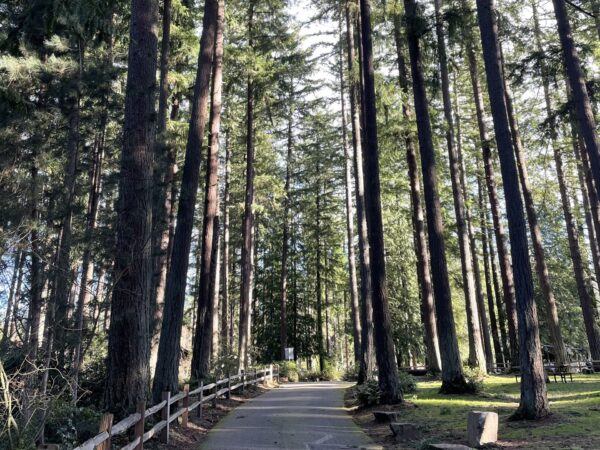
We live in a warming and aging world. It’s time that we think of these two things together.
Climate change is a global problem with local implications. In the past decades in King County, we have already seen hotter summers, heavier rain events, less snowpack, and higher sea levels.
This has real implications on public health. During the June 2021 heat wave, 138 people died of heat-related deaths in Washington state. Of these individuals, two thirds were ages 65+. As our population ages, we must pay more attention to how climate change harms older adults.
Many older adults recognize and care about these issues. I surveyed 71 older adults across Greater Seattle Area and found that 98.6% care about future generations, 90.1% are concerned about climate change, and 89% intentionally act sustainably.
And it is not too late to get involved now. Jane Fonda became an environmental activist as an older adult, saying, “the cure for despair is action.” In the face of such a large crisis, it can be easy to feel like our actions don’t matter. When it comes to sustainability, we all need to do what we can to leave behind a livable planet for generations to come.
Connect with nature
We can’t work on something we don’t feel connected to. American culture normalizes an extractive relationship with the environment that separates ourselves from our planet. Instead of thinking about what we can give to the environment, American culture focuses on what we can get from it. But it is valuable to rethink this relationship as reciprocal instead.
Care for houseplants, restore local parks, report pollution, visit community gardens, camp, birdwatch, participate in outdoor recreation programs in Seattle or King County, or do anything else that gets you outside and working to protect the Earth. And enjoy great health benefits while you’re at it.
You can also strengthen this relationship by eating and growing nutritious food. Getting involved with local community farms, such as Hip Hop is Green’s Cherry Street Farm, Wa Na Wari’s Garden, Nurturing Roots Farm, Marra Farm, City Fruit, and 21 Acres, can be a fantastic way to connect with the land and sustain a reciprocal relationship with the environment.
Make local, healthy food more accessible to yourself by applying to the senior farmers market nutrition program and Seattle’s Fresh Bucks program.
Connect with others who care
We are social beings who learn from and motivate each other. Working together, we can create shifts in culture and policy that alter people’s actions on a large scale, without placing the burden on individual choices.
To connect with others who care, try attending your city’s upcoming Earth Day events or getting involved with one of many local environmental programs. Alternatively, become a champion for your own neighborhood. Meet with your neighbors, city leaders, and elected officials, and make the change you want to see in your own communities. You and your community are your best advocates.
Reconsider how you get around
Transportation is the largest source of greenhouse gas emissions, making up nearly half of King County emissions and 28% of U.S. emissions. Save our air quality and climate future by reconsidering your commute.
Rather than riding a car, consider riding the bus or train, biking, walking, or sharing a ride. Discover a variety of transit options on Find A Ride, including underutilized ride services made for older adults. Not only is this an amazing way to reduce your emissions, but it helps build movement and social connection into your routine.
Reduce, reuse, repair, recycle
In Seattle, nearly all our landfill waste gets hauled via train across state borders to the Columbia Ridge Landfill in Oregon. That is quite a journey for a plastic wrapper.
Our first line of defense: reduce. Bringing in fewer belongings can reduce physical and mental clutter, while also reducing demand for those products. Consumer culture has taught us to always value more. It is good for our spaces, mind, wallet, and planet to be content with what we have. This practice can extend to reducing our water usage, which also closely relates to our diets.
Our second line of defense: reuse. Virtually no household good needs to be bought new. Get clothes and household goods from thrift stores, books from your local library, art supplies from Seattle REcreative, furniture from the Furniture Repair Bank or Facebook Marketplace, tools from tool libraries, and all sorts of things from your local Facebook Buy Nothing Group. Many of these places also seek volunteers! Want to be extra creative? Reuse water by building a rain garden on your property.
Our third line of defense: repair. According to several older adults I’ve talked to, older adults tend to have more repair skills than younger adults, including sewing, mending, and woodworking. Not only can you use these skills to keep usable goods out of the landfill, but you can teach them to your community and create a culture of repair. Learn and share these skills at repair hubs in your city.
Our fourth line of defense: recycle. This is our last line of defense because recycling often lowers the quality of material that can be reused each time. But it is absolutely better than nothing. Learn what you can recycle and compost in Seattle and King County. Believe it or not, composting can even extend to end-of-life plans, with some organizations composting human and pet bodies.
Protect yourself during extreme weather events
It is great to know how to prepare for extreme heat, prepare for wildfire smoke, and recover from floods when climate disasters arise. Keeping your home a safe temperature can help; apply for King County energy assistance programs to make this affordable to you.
Consider joining your local senior center for access to community and local resources. In the event of emergencies, senior centers disperse relevant resources, catered to the needs of older adults. Some offer free or low cost meals and services.
Share your knowledge
You have so much expertise that relates to sustainability. Whether that comes from your connection with nature, your practice of reuse and repair, your use of public transit, or something else, share it with the world!
Sharing your sustainability-related ideas and practices with your friends, co-workers, and family members helps create a culture of respect for the environment. Have these conversations with younger generations and figure out how you can be in solidarity with the Earth together.
Leaving a legacy of sustainability
The older adults who began Elders Climate Action wanted to show younger generations that they were “here and alive to help.” Younger people are not alone in the fight for a livable future.
It is not too late: think globally and act locally. Make choices every day to leave the legacy of sustainability.
FAQs
I don’t have particular skills I can contribute to the movement, can I still get involved?
In any given space, there is always something we can learn and something we can share. Do not doubt the relevance of your own experiences. Get involved in a way that excites you and find your niche. Environmentalism is stronger with us all.
I don’t have time or money to contribute to the movement. Is there anything I can do?
Some parts of sustainability save time or money. Repairing and reusing what you have saves money and reduces the time you spend shopping. That being said, always do what you can and give yourself grace through your efforts. Anything is better than nothing.
Isn’t reuse bad for the economy?
Continuous creation of “new” materials is unsustainable on a planet with limited resources. For long-term economic well-being, our money will increasingly have to go towards material recovery rather than material extraction. Learn about the circular economy.
I have experienced ageism while volunteering. What should I do?
Older adults are holders of knowledge whose perspectives should strategically be valued. Share your volunteer experience with the host organization so they can improve their inclusion of older adults. Whether you stick around there or go somewhere else that respects your time immediately, do not let others stop you from working on what you care about.
“The climate crisis requires collective action on a scale that humanity has never accomplished, and in the face of those odds a sense of hopelessness may occasionally descend. But the antidote to that feeling is to do something. The question is: what? Changing individual lifestyle choices like giving up meat and getting rid of single-use plastic won’t cut it when time is not on our side. We need to go further, faster. Instead of changing straws and lightbulbs, we need to focus on changing policy and politicians. We need large numbers of people working together for solutions that work for the climate.” – Jane Fonda, 2021, age 83
“Elderhood is not a time for stepping back, but for stepping up, for stepping into your own power . . . Becoming an elder is both a precious gift and a serious responsibility—a responsibility for sharing knowledge, and for safeguarding the future of life.” – Robin Wall Kimmerer, 2021, age 67
 Contributor Sonali Agarwal is an intern with Age Friendly Seattle. She is studying Law, Societies, & Justice and Environmental Studies at the University of Washington. To read more about Civic Coffee and other programs, visit Age Friendly Seattle.